

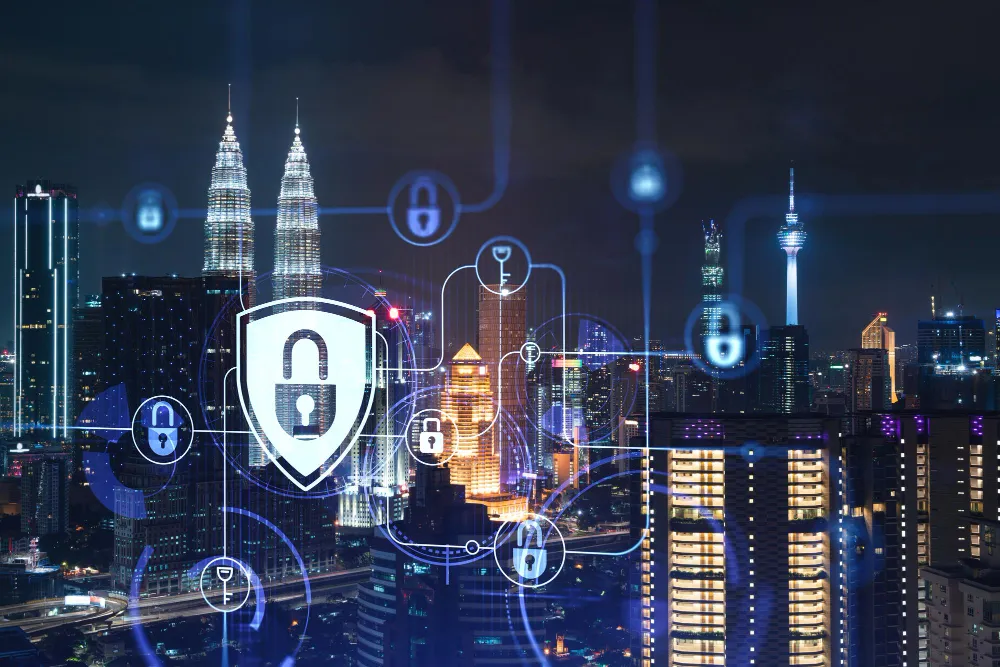
Cybersecurity Malaysia: Who Needs It and Why It Matters
Introduction
In 2026, Malaysia is no longer just a participant in the global digital economy—it is a central hub. With the rapid rollout of 5G now covering over 97% of the population, a booming data center industry in Johor, and a national “Cloud-First” strategy, our reliance on digital systems has reached an all-time high.
However, this hyper-connectivity has also made the nation a prime target for digital exploitation. In 2025 alone, cyberattacks in the country surged by nearly 30%, with financial losses from breaches exceeding RM1.22 billion. Because of these escalating risks, cybersecurity Malaysia is no longer just an “IT issue”—it is a matter of national and personal survival. As we move further into a cloud-dependent era, businesses must look toward partnering for private cybersecurity to safeguard their proprietary data and operational continuity.
Who Needs Cybersecurity in Malaysia?
The short answer: Everyone. However, the level of risk and the necessary defenses vary depending on your specific profile and industry.
Small and Medium Enterprises (SMEs)
SMEs are the backbone of the Malaysian economy, yet over 60% currently lack even basic security measures. In 2026, hackers view SMEs as the “path of least resistance” to gain entry into larger supply chains.
- The Risk: Ransomware that encrypts inventory systems and “Quishing” (QR code phishing) which targets DuitNow QR payments at retail points.
- Why it Matters: A single successful attack costs a Malaysian SME an average of RM1.2 million in downtime and lost contracts—a blow that most cannot recover from. Many SMEs are now turning to AceTeam Networks to implement robust managed security services that fit their budget.
Critical National Information Infrastructure (CNII)
This includes the government, healthcare, banking, and energy sectors. Under the Cyber Security Act 2024, these sectors are now legally mandated to follow strict security codes enforced by the National Cyber Security Agency (NACSA).
- The Risk: State-sponsored espionage and sophisticated attacks on Active Directory servers designed to paralyze national services.
- Why it Matters: A breach in this sector doesn’t just lose money; it can compromise national sovereignty and public safety. These organizations require advanced threat intelligence to stay ahead of evolving global adversaries.
Individual Citizens
Every Malaysian with a smartphone is a potential target for the “scam culture” that has evolved significantly in 2026.
- The Risk: AI-powered “vishing” or voice phishing where a caller uses a deepfake of your boss’s or family member’s voice, and malicious APK files that drain bank accounts via accessibility permissions.
- Why it Matters: Beyond financial loss, identity theft in Malaysia is currently a major concern, with massive batches of personal records occasionally surfacing on the dark web.
Why It Matters: The 2026 Threat Landscape
Understanding the “why” behind cybersecurity Malaysia requires looking at the specific, localized threats we face today. The landscape has shifted from simple viruses to sophisticated, AI-driven ecosystems that require professional intervention.
The Rise of AI-Powered Scams
In 2026, scammers use Large Language Models (LLMs) to generate “Manglish” (Malaysian English) and fluent Malay phishing messages that are eerily convincing. They study your social media patterns to send messages at the exact time you are most likely to click, such as a fake delivery notification right after you post an online purchase.
Data Compliance
With the introduction of the Cyber Security Act 2024 and the Online Safety Act 2025, the legal cost of being unsecure has skyrocketed for Malaysian corporations.
- Mandatory Reporting: Organizations must now report incidents to National Cyber Security Agency (NACSA) within strict timelines or face heavy fines and potential jail time for directors.
- Licensing: Penetration testing and technical security services must now be licensed by NACSA, ensuring only qualified providers protect our data. According to the Malaysian Communications and Multimedia Commission (MCMC), digital safety is a shared responsibility that requires strict adherence to these evolving regulatory frameworks.
The “Data Center Boom”
As Johor Bahru becomes a regional data center powerhouse, the physical and digital security of these facilities is vital. Any disruption to these hubs could affect the digital services of the entire ASEAN region, making them high-value targets for sabotage.
How Malaysia is Fighting Back
The Malaysian government has stepped up its defense significantly in the last two years through multi-agency collaboration:
- NACSA & CSCDC: The National Cyber Security Agency (NACSA) now oversees the newly formed Cyber Security and Cryptology Development Centre (CSCDC) to consolidate national defense resources and research.
- National Goal for Defenders: Malaysia is working toward a target of 25,000 cybersecurity professionals by the end of 2026 to close the critical talent gap.
- Cyber999: The public can report incidents directly to Cybersecurity Malaysia via the Cyber999 mobile app for immediate assistance with scams, hacking, or data leaks.
Deep Dive: Protecting Your Hybrid Workforce
As hybrid work becomes the standard in Kuala Lumpur and Penang, the perimeter of cybersecurity Malaysia has moved from the office to the home. Employees using unsecured home Wi-Fi to access corporate databases create massive vulnerabilities.
Organizations are now prioritizing “Zero Trust” architectures. This means never assuming a device is safe just because it has a password. Utilizing business-grade headsets with integrated secure firmware and encrypted communication tools like Zoom or Jabra helps maintain a secure environment for sensitive discussions.
Furthermore, digital transformation through AceTeam Digital allows companies to integrate security directly into their workflow rather than treating it as an afterthought. This holistic approach ensures that as your business grows, your defensive shield grows with it.
FAQs: Common Concerns in Malaysia
While 2FA is essential, hackers in 2026 use Session Hijacking and Malicious APKs to bypass it. Always ensure your banking apps are updated and never download apps from outside the official Google Play or Apple App Store.
Change your passwords immediately, enable MFA on all accounts, and report the incident to MyCERT (Malaysian Computer Emergency Response Team) via the Cyber999 portal.
Before scanning a DuitNow or restaurant QR code, check if it is a sticker placed over the original. "Quishing" often involves hackers replacing legitimate codes with their own to redirect your payment to a mule account.
Yes. In the context of cybersecurity Malaysia, standard home routers provided by ISPs are often insufficient for business traffic. A dedicated firewall provides deep packet inspection that can stop modern threats before they enter your network.
Under the Cyber Security Act 2024, failing to report incidents to NACSA or using unlicensed security providers can result in heavy fines for corporations. In some cases, company directors may also face jail time for serious regulatory violations.
Conclusion
Cybersecurity Malaysia is the price of admission for our nation’s digital future. Whether you are an SME owner protecting your livelihood or a citizen protecting your family’s savings, staying informed and adopting a “Zero Trust” mindset is the only way to navigate 2026 safely.
Proactive defense is always more cost-effective than reactive recovery. By leveraging professional cybersecurity services, Malaysian organizations can ensure they remain resilient against the ever-shifting tide of digital threats.